
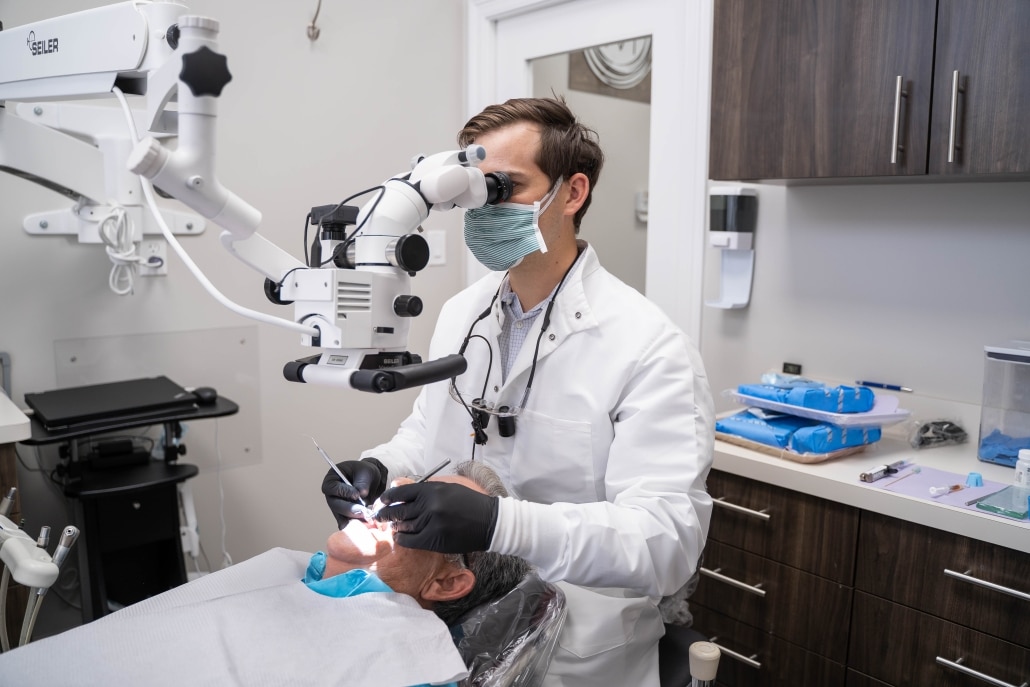
Laser-Assisted Periodontal Therapy in Mundelein: How It Works & Why It Helps
Compared to traditional periodontal surgery, laser-assisted treatment offers a host of benefits:
Read moreGeneral & Preventive
The short version
Periodontal (gum) disease is an infection of the tissues and bone that hold your teeth in place, and it’s the leading cause of tooth loss in adults. Nearly half of American adults over 30 have some form of it — and most don’t know, because gum disease is largely painless until it’s advanced. The good news: caught early, it’s very treatable, and even advanced disease can be controlled.
At Markiewicz Dental in Mundelein, IL, periodontal care doesn’t require a referral across town. Dr. Ryan Bogard, our board-certified periodontist, practices right here alongside our general dentists — so every patient is screened for gum disease at every exam, and if treatment is needed, specialist care happens under the same roof.

Gum disease rarely hurts in its early stages, which is exactly why it goes unnoticed. Watch for:
One thing worth saying plainly: bleeding gums are not normal. Healthy gums don’t bleed with routine brushing and flossing — if yours do, that’s your earliest and most useful warning sign.
The earliest stage — inflammation of the gum tissue caused by plaque along the gumline. Gums may look red or puffy and bleed easily, but no permanent damage has occurred yet. Gingivitis is fully reversible with professional cleaning and consistent home care. This is the stage where treatment is easiest, which is why we screen every patient at every visit.
When inflammation goes untreated, infection spreads below the gumline. The gums begin to pull away from the teeth, forming pockets where bacteria collect, and the infection starts to break down the bone and connective tissue that anchor your teeth. Bone lost to periodontitis doesn’t grow back on its own — but the disease can be stopped and managed, and in some cases lost tissue and bone can be rebuilt with grafting procedures.
Treatment depends on the stage and severity of disease, which is why everything starts with a thorough periodontal evaluation — measuring the pockets around each tooth and reviewing your X-rays. From there, your dentist or Dr. Bogard will explain exactly what they found and what your options are.
The first line of treatment for periodontitis. We clean carefully beneath the gumline, removing bacterial deposits and hardened tartar from the root surfaces so the gum tissue can heal and reattach. It’s typically completed over two visits with local anesthetic, and most patients are surprised how comfortable it is.
After active treatment, gum disease is managed, not cured — like other chronic inflammatory conditions, it needs ongoing attention. Periodontal maintenance visits are deeper and more frequent than standard cleanings, typically every three to four months, to keep bacteria from re-establishing below the gumline.
For more advanced disease, Dr. Bogard provides specialist care on site, which may include localized antibiotic therapy, pocket reduction procedures, or gum and bone grafting to rebuild tissue lost to infection. If your care reaches this stage, you’ll get a clear explanation of what’s involved and why — no surprises, no pressure.
The mouth isn’t sealed off from the rest of you. Research has linked untreated periodontal disease to higher risks of heart disease, complications in managing diabetes, respiratory infections, and pregnancy complications — the chronic inflammation and bacteria involved in gum disease don’t stay put. Researchers are still working out the exact mechanisms, but the association is strong enough that treating gum disease is increasingly seen as part of protecting your overall health, not just your teeth. It’s also a two-way street: conditions like diabetes make gum disease harder to control, and vice versa.
Questions
Patient reviews
I have been a patient here for over twenty years and I would not go anywhere else. Everyone knows my name the moment I walk in, and the care has always been thorough and completely honest.
Dr. Markiewicz walked me through my implant plan on a 3D scan so I understood exactly what would happen. The surgery was far easier than I expected and the tooth looks completely natural.
I used to dread the dentist. This office changed that. They explained every step, checked in constantly, and never once made me feel rushed or judged about the work I had put off.
Bleeding gums, bad breath that won’t quit, or just overdue for a checkup? Call Markiewicz Dental at (847) 566-2811 or request an appointment online. General dentistry and board-certified periodontal care, together in Mundelein.
From the practice
Compared to traditional periodontal surgery, laser-assisted treatment offers a host of benefits:
Read more