
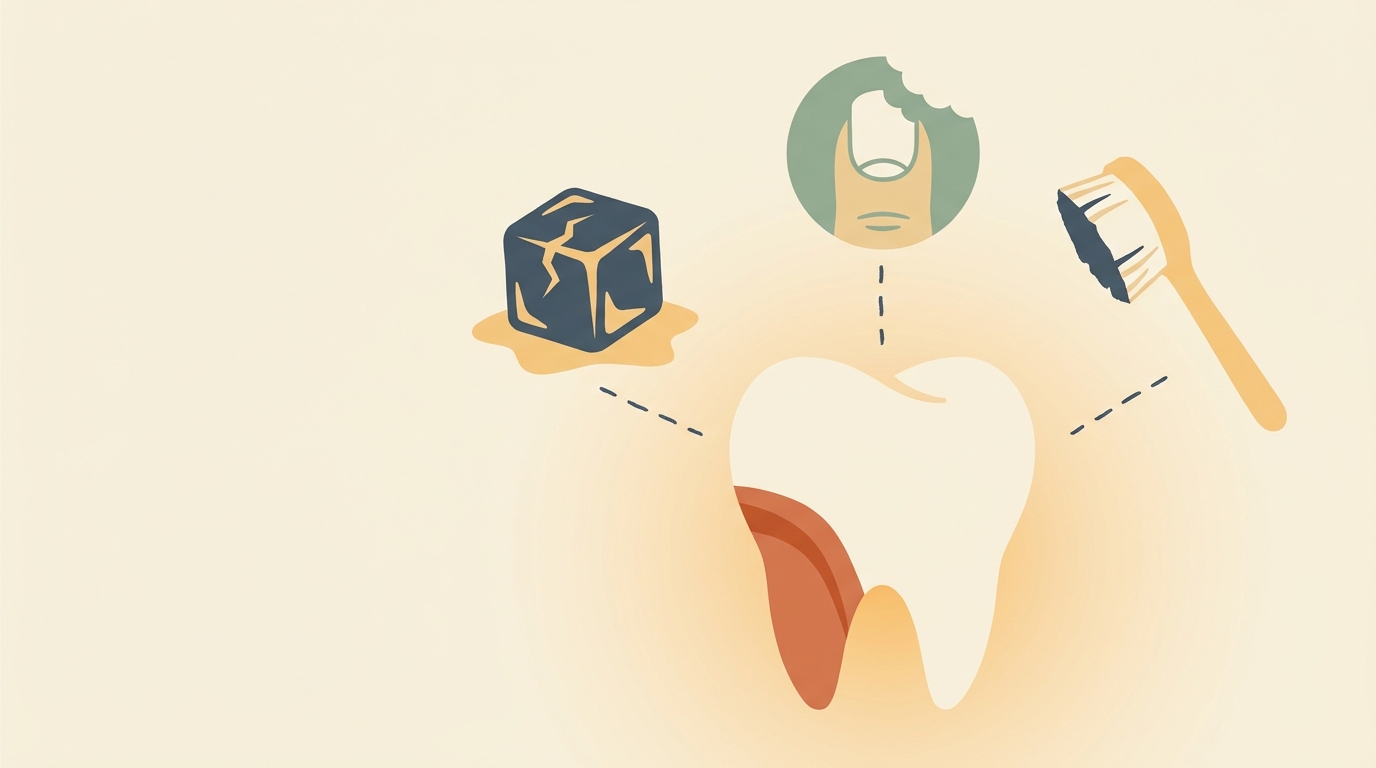
Dental bonding on a chipped tooth typically lasts between 3 and 10 years before it needs touch-up or replacement, according to Cleveland Clinic. The common myth — that bonding is a quick fix that falls off within a year or two — is wrong. The other common myth — that it's permanent once it's placed — is also wrong. The truth sits in between, and what you do after the appointment matters more than most patients realize.
How long does dental bonding actually last on a chipped tooth?
Dental bonding generally lasts 3 to 10 years before it needs to be touched up or replaced, per Cleveland Clinic. The range is wide because longevity depends on where the repair sits, how hard you bite, whether you grind, and what you chew. A small chip on a canine behaved gently can push toward the upper end. A front-edge repair on a nighttime grinder can fall at the lower end.
Why does the 3-to-10-year range vary so much?
How long bonding lasts depends on oral habits and how many teeth were treated, according to Cleveland Clinic. Translation: the composite itself is consistent, but your mouth isn't. Bite force, clenching, ice chewing, nail biting, and acidic drinks all pull a repair toward the shorter end of the range. Gentle use and regular cleanings pull it toward the longer end.
The location of the chip matters too. Bonding on a biting edge absorbs direct force every time you eat. Bonding tucked near the gumline sees far less stress. Two patients can leave the same appointment with identical repairs and get very different mileage out of them.
Myth: "If my bonding stains or dulls, it has failed."
A change in appearance doesn't mean the repair has failed. Composite resin can stain or lose its polish over time without losing its bond to the tooth. In many cases, a quick polish at a cleaning visit restores the look without redoing the work. Coffee, red wine, and tobacco are the usual culprits, and the surface — not the structure — is what's reacting.
At Markiewicz Dental in Mundelein, IL, that distinction matters because it changes the recommendation. A dulled surface is a polish. A chipped edge is a touch-up. A failing margin is a replacement. Three different problems, three different answers.
Myth: "Bonding is a bigger commitment than veneers."
It's the opposite. Dental bonding is a reversible cosmetic procedure, unlike porcelain veneers, which require permanent enamel removal. A dentist can usually complete bonding in one office visit. Veneers are a longer process and a one-way door. Bonding gives you a result today and leaves future options open.
That's a meaningful difference for anyone weighing cosmetic bonding vs. veneers for a single chipped front tooth. If the chip is small and the rest of the smile is healthy, bonding is often the smaller, smarter first step.
Myth: "My bonding chipped, so my dentist did it wrong."
Usually, something else is doing the damage — grinding and clenching habits are a common culprit that many patients don't realize they have. Grinding or clenching puts extra force on teeth and restorations and can shorten the lifespan of dental bonding. Signs of grinding can include chipped or cracked teeth and worn, damaged edges.
Bonding sits right in the line of fire. The thin edges that make a repair look natural are the same edges that break first under grinding force. If your bonding keeps chipping, the fix isn't more composite — it's protecting the composite you have.
What's the single biggest thing patients skip?
After cosmetic work, the step patients skip most often is the night guard. When someone finishes veneers or bonding, they're understandably excited about their new smile, and a night guard feels like an afterthought. But for many patients, it's the single biggest factor in how long that smile lasts. Most people who grind or clench have no idea they're doing it. It happens while you sleep, with far more force than normal chewing, and it tends to hit the edges of your front teeth the hardest. That's exactly where veneers and bonding are most delicate. Porcelain veneers are strong, but a thin edge can chip or crack under that kind of pressure. Bonding is even more vulnerable, and grinding can wear it down or break off pieces much sooner than it should. When that happens, the fix usually means repairing or replacing the work. On a smile you've invested in, that's an expensive and frustrating setback, especially when it was preventable. The other mistake is waiting. Some patients plan to get a night guard eventually, but the first few months matter just as much as the next ten years. Ideally, your night guard is ready right when your cosmetic work is finished. Here, that's easy: we take a quick digital scan and print your night guard right in our office, made to fit your new teeth precisely. And then wear it every night. Bring it to your cleanings, too, so we can check the fit and look for signs of wear. It's a small habit that protects a big investment.— Danielle Vasiliev, Dentist, Markiewicz Dental
How do you make bonding last closer to 10 years than 3?
Three habits move the needle: wear a night guard if you grind, avoid using your teeth as tools, and keep up with regular cleanings so the surface stays polished and the margins stay sealed. A custom night guard made from a dentist's mold is designed to fit your teeth precisely.
Markiewicz Dental prints night guards in-house using 3D digital printing, which means the guard is made to fit your new bonded edges precisely and can be ready without a long turnaround. Bring it to cleanings so the fit can be checked and wear patterns reviewed.
How does bonding longevity compare across situations?
| Situation | Typical lifespan | Main risk factor |
|---|---|---|
| Small chip, canine or premolar, no grinding | Closer to 10 years | Surface staining |
| Front-edge chip, light coffee drinker | 5–8 years | Stain, gradual wear |
| Front-edge chip, nighttime grinder, no guard | Closer to 3 years | Edge fracture |
| Multiple teeth bonded, heavy bite | Varies widely | Cumulative force |
The 3–10 year range from Cleveland Clinic is a general guideline, not a guarantee. Where you land inside it is largely a function of habits and protection.
Does Mundelein, IL weather or lifestyle change anything?
Not the climate, but the seasonal rhythm does. Lake County winters bring more hot coffee and holiday wine; both stain composite faster than the material's polish can hide. Summer brings ice in every drink, and biting ice is one of the fastest ways to chip bonding on a front tooth. Patients who come in for cleanings after the holidays often need a polish; patients who come in after a summer of iced drinks sometimes need a touch-up. Timing a cleaning for late winter and again before the holidays tends to keep bonding looking its best year-round.
When is it time to touch up or replace bonding?
Replace or repair when you see a visible chip in the composite, a dark line at the margin where it meets the tooth, a rough edge your tongue catches on, or sensitivity at the repair site. A dull or slightly stained surface usually just needs polishing. If the chip is small, a touch-up is often faster and less expensive than a full redo. Your dentist can tell you which it is in a single visit.
Frequently asked questions
How long does dental bonding last on a chipped front tooth?
Dental bonding on a chipped tooth typically lasts 3 to 10 years before it needs touch-up or replacement, according to Cleveland Clinic. Front teeth sit in a higher-stress zone, so bonding there tends to land in the middle of that range. A night guard, gentle habits, and regular cleanings push it toward the longer end.
Is dental bonding reversible?
Yes. Dental bonding is a reversible cosmetic procedure, unlike porcelain veneers, which require permanent enamel removal. Because little or no tooth structure is removed to place composite, you keep the option to choose a different treatment later — including veneers — if your goals change. That reversibility is one of bonding's biggest advantages for a single chipped tooth.
How long does the bonding appointment take?
A dental bonding procedure can usually be completed in a single office visit, according to Cleveland Clinic. Most single-chip repairs are finished in one appointment with no follow-up required. If you're bonding multiple teeth, plan for additional time but still typically one visit.
Will my bonding stain like my natural teeth?
Composite resin can stain or lose its polish over time, especially with coffee, red wine, and tobacco. A change in appearance doesn't necessarily mean the repair has failed — often a professional polish at a cleaning restores the look. Reducing staining drinks or rinsing after them helps, as does keeping up with cleanings.
Do I need a night guard after bonding?
If you grind or clench, yes. Grinding or clenching can occur without the person knowing, and it hits the edges of front teeth hardest — exactly where bonding is most delicate. A custom night guard from a dentist's mold is made to fit your teeth precisely and can meaningfully extend how long bonding lasts.
What's the difference between touching up and replacing bonding?
A touch-up adds composite to a small chip or refreshes a worn edge without removing the existing bonding. A replacement removes the old composite and places a new restoration, usually because the margin is failing, the stain is deep, or the repair has fractured. A touch-up is faster and typically less involved; your dentist can tell you which your situation calls for.
The bottom line
Dental bonding on a chipped tooth isn't a one-year patch, and it isn't permanent. It's a 3-to-10-year repair whose actual lifespan is written by how you treat it. Protect it from grinding, keep the surface polished, and don't confuse a stain with a structural failure. Done right, bonding is one of the most forgiving, reversible cosmetic options available for a single chipped tooth.
Going to the dentist is never a favorite activity and the staff at Markiewicz Dental seem to really know this. Everyone is cheerful, helpful, and genuinely takes interest in the patient’s well being. I had a front crown replaced by Dr. David and he matched to my other front teeth flawlessly. I had an appointment on my birthday with Tammy (she was fun yet smart and focused) and everyone knew it - and they treated me like a queen! Glad to receive my care from them.
Readers in Mundelein, IL who want a chipped tooth evaluated, bonding touched up, or a night guard made to protect existing work can reach Markiewicz Dental at (847) 566-2811 or https://www.amdds.com to get started.