
Silent Enemies of Teeth and Gums

Every day our mouths take on challenges we barely notice: meals, snacks, breath mints, drinks, late-night sweets. What happens in the background matters a lot—even when we don’t see it. Some of the biggest threats to teeth and gums are the silent ones: things that sneak up slowly, causing damage before we really realize it.

Hidden Bacteria And Biofilm

Plaque might sound like an old dentist’s warning, but it’s actually the everyday build-up of bacteria that attaches to tooth surfaces. Those sticky films love to feed on sugars and starches. Over time, acids they release begin to erode enamel—even in small amounts. If plaque isn’t removed consistently, it converts into a hardened layer you can’t clean off by brushing alone. That’s where cleanings matter.

Gum Recession And Bone Loss

Even without apparent pain, gums sometimes shrink back from the teeth—that’s gum recession. The things that cause it can be subtle—brushing too hard, genetics, or long-term inflammation. As gums retreat, the roots may become exposed, making teeth sensitive, more prone to decay, or less stable. Underneath, bone supporting the teeth can reduce in density. Over time, that weakens your hold on teeth. In extreme cases, it can even affect how dentures in Mundelein, IL feel or fit—if gums aren’t healthy, replacements may not offer the comfort you expect.

Early Decay And The Need For Vigilance

Spots of decay sometimes start out invisible to the eye, especially between teeth or under the gum-line. You might feel nothing. No pain. Just a change in how a tooth takes pressure or responds to temperature. That’s why regular checkups are essential—they catch issues before they worsen. Cavities that are small are cheaper and easier to fix. Let them grow too long, and you may face root canals, crowns, or even extraction.

Your teeth and gums are tougher than you might think, but even the strongest need care. The quiet threats—plaque, recession, hidden decay—don’t announce themselves before they do damage. Keep up with your preventive visits, talk openly with your dentist in Mundelein, IL about what you notice, and treat issues early so your smile stays healthy, stable, and confident. Get in touch with Markiewicz Dental today to learn more about protecting your teeth for a lifetime.

Do You Need an Emergency Dentist or the ER? Here’s How to Know

When dental pain or trauma strikes, it can be hard to know where to go first. Should you head straight to the emergency room, or call your dentist? At Markiewicz Dental, we want you to have clarity in these stressful moments so you can get the right care as quickly as possible.

Understanding a Dental Emergency

A dental emergency usually involves sudden pain, trauma, or an issue that threatens the health of your teeth and gums if not addressed quickly. Not every dental problem requires a trip to the ER—many situations are best treated directly in the dental office.

When to Call an Emergency Dentist

In most cases, your dentist is the right person to see first. Dentists are trained and equipped to handle:

  • Severe toothaches that don’t improve with over-the-counter pain relievers
  • Chipped, cracked, or broken teeth
  • Knocked-out (avulsed) teeth – if handled quickly, they can sometimes be saved
  • Lost fillings, crowns, or restorations causing discomfort or sensitivity
  • Dental abscesses or infections (swelling around a tooth or gum)
  • Soft tissue injuries to the lips, gums, or tongue that are not causing uncontrolled bleeding

Dentists have the tools to relieve your pain, stop infection from spreading, and restore your smile.

When the ER is the Better Option

There are situations where you should skip the dentist and head straight to the emergency room, especially if your overall health or safety is at risk:

  • Uncontrolled bleeding that won’t stop with gentle pressure
  • Severe swelling of the face, jaw, or neck that makes it difficult to breathe or swallow
  • High fever and systemic illness from an infection spreading beyond the mouth
  • Facial trauma involving broken bones or possible concussion in addition to dental injury

In these cases, emergency medical care comes first. Once you are stabilized, your dentist can address the dental concerns that remain.

What to Do in the Meantime

If you’re unsure, here are a few quick steps you can take while arranging care:

  • Knocked-out tooth: Keep it moist in milk or place it gently back in the socket, and call us immediately
  • Broken tooth or filling: Rinse your mouth gently and avoid chewing on that side
  • Abscess or swelling: Use a cold compress on the outside of your face and avoid heat
  • Bleeding: Apply firm, gentle pressure with clean gauze

Markiewicz Dental – Your Local Emergency Dentist in Mundelein

Most dental emergencies are best handled by a trusted dental team who knows your history. At Markiewicz Dental, we offer same-day emergency appointments and a compassionate team ready to help you feel better fast.

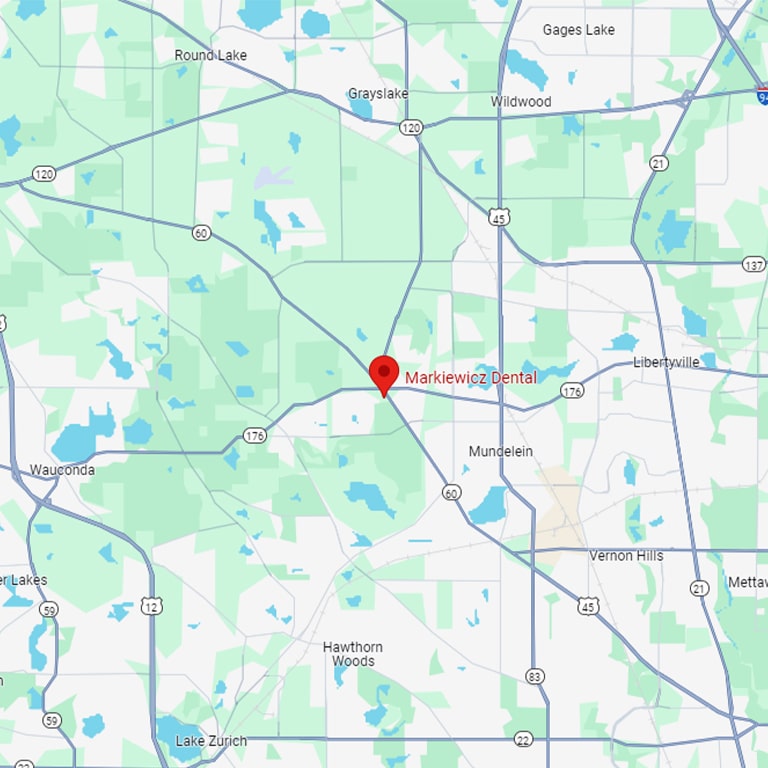
If you’re experiencing a dental emergency in Mundelein, Libertyville, Vernon Hills, or the surrounding area—call us right away at 847.566.2811 We’ll guide you on whether to come in immediately or head to the ER first.

 What Can I Do If My Tooth Enamel Is Weak?

Strong teeth are good at chewing and eating. If you have weak or thin tooth enamel, you may have many problems using and taking care of your teeth. Your dentist in Mundelein, IL, can help. We provide dental treatment for people who have a number of dental problems, including weakened/thin tooth enamel.

What Causes Weakened Tooth Enamel?

Tooth enamel typically starts off strong and grows weaker over time, often due to erosion. The more your teeth erode, the weaker your teeth will be.

There are many reasons people experience weakened/eroded tooth enamel. Here are some examples of problems that can cause weakened tooth enamel:

  • Consumption of acidic foods and beverages: If your diet consists of many high-acid foods and drinks, you may erode your teeth over many years.
  • Bruxism: Bruxism is a condition that occurs when a patient frequently grinds their teeth. Bruxism can grind tooth enamel down and may lead to the teeth becoming cracked and broken.
  • Acid reflux: If you have chronic acid reflux, regular exposure to stomach acid may weaken your tooth enamel with time.
  • Brushing too hard: If you brush your teeth very hard or brush your teeth with a hard-bristle toothbrush, your teeth may become thin with time.

What Can You Do About Thin Tooth Enamel?

If you have thin tooth enamel, your dentist may recommend a variety of treatments to reinforce and strengthen your tooth enamel.

  • Dental bonding is a composite material that’s attached to tooth enamel to cover and strengthen it.
  • Dental veneers are a cover that the dentist may place over your teeth to reinforce the enamel and improve the appearance of your teeth.
  • dental crown is a cap that the dentist can place over the entire tooth to protect the enamel.

How Can You Tell If You Have Weak Tooth Enamel?

If you have thin tooth enamel, the dentist will likely let you know. You may also notice that your teeth break easily, and you may also have tooth sensitivity as well.

If you have thin tooth enamel, it’s important to see the dentist for regular dental exams in Mundelein, IL. Call today to make your next dental appointment.

Why Does Your Tooth Hurt? Uncovering the Top 6 Causes of Tooth Pain

Tooth pain can disrupt your day and signal underlying dental issues. At Markiewicz Dental in
Mundelein, we believe in helping our patients understand the reasons behind their discomfort to
ensure timely and eƯective treatment. Here are some common causes of tooth pain:

1. Cavities (Dental Caries)
One of the most prevalent reasons for tooth pain is cavities. These are caused by bacterial activity
that erodes tooth enamel, leading to holes in the teeth. If left untreated, cavities can penetrate
deeper layers, causing significant pain and sensitivity.

2. Tooth Sensitivity
Experiencing sharp pain when consuming hot, cold, sweet, or acidic foods? Tooth sensitivity might
be the culprit. This occurs when the enamel wears down, exposing the dentin layer. Receding gums
can also expose tooth roots, contributing to sensitivity.

3. Gum Disease (Periodontal Disease)
Gum disease, including gingivitis and periodontitis, can lead to tooth pain. Inflammation and
infection of the gums can cause soreness and discomfort. Advanced stages of periodontal disease
can also aƯect the bones supporting your teeth, leading to further pain and complications.

4. Tooth Abscess
A tooth abscess, an infection at the root of the tooth or between the gum and a tooth, is a serious
condition that requires immediate attention. Abscesses often result in throbbing, persistent pain
and can cause swelling, fever, and even a bad taste in the mouth.

5. Cracked or Fractured Teeth
Injury or biting on something hard can crack or fracture your teeth. This damage can expose nerves,
leading to sharp pain and sensitivity. Even minor cracks can cause significant discomfort and
require professional evaluation.

6. Impacted Wisdom Teeth
When wisdom teeth do not have enough space to emerge or develop normally, they become
impacted. Impacted wisdom teeth can push against adjacent teeth, causing pain and potentially
leading to misalignment and other dental issues.

At Markiewicz Dental, we oƯer comprehensive dental care to diagnose and treat the root cause of
your tooth pain. Regular check-ups, good oral hygiene, and prompt attention to dental discomfort
can prevent minor issues from becoming major problems. If you’re experiencing tooth pain, don’t
wait. Schedule an appointment with us today and let our experienced team restore your smile and
comfort.
__
Meta Description: Discover common causes of tooth pain and how to address them with expert
care at Markiewicz Dental in Mundelein. Schedule your appointment today for personalized
treatment.